
Start with what your customer needs to do
A useful business website explains what you do, shows why someone can trust you and makes the next step easy. For a business in Newcastle, KZN, that could mean a quote request, a WhatsApp enquiry, a booking or product browsing. Choose the features your customers will use before adding extras.
Before discussing colours or animations, finish this sentence: “When someone visits our website, we want them to…” The answer helps decide which pages, photographs and buttons belong on the site. It also helps keep the cost and the message under control.
Different businesses need different websites
Our work shows why one layout cannot do every job. The Legend Black Jesus website helps visitors browse products and continue their order on WhatsApp. A clear product photo and an easy order path matter more there than a long company introduction.
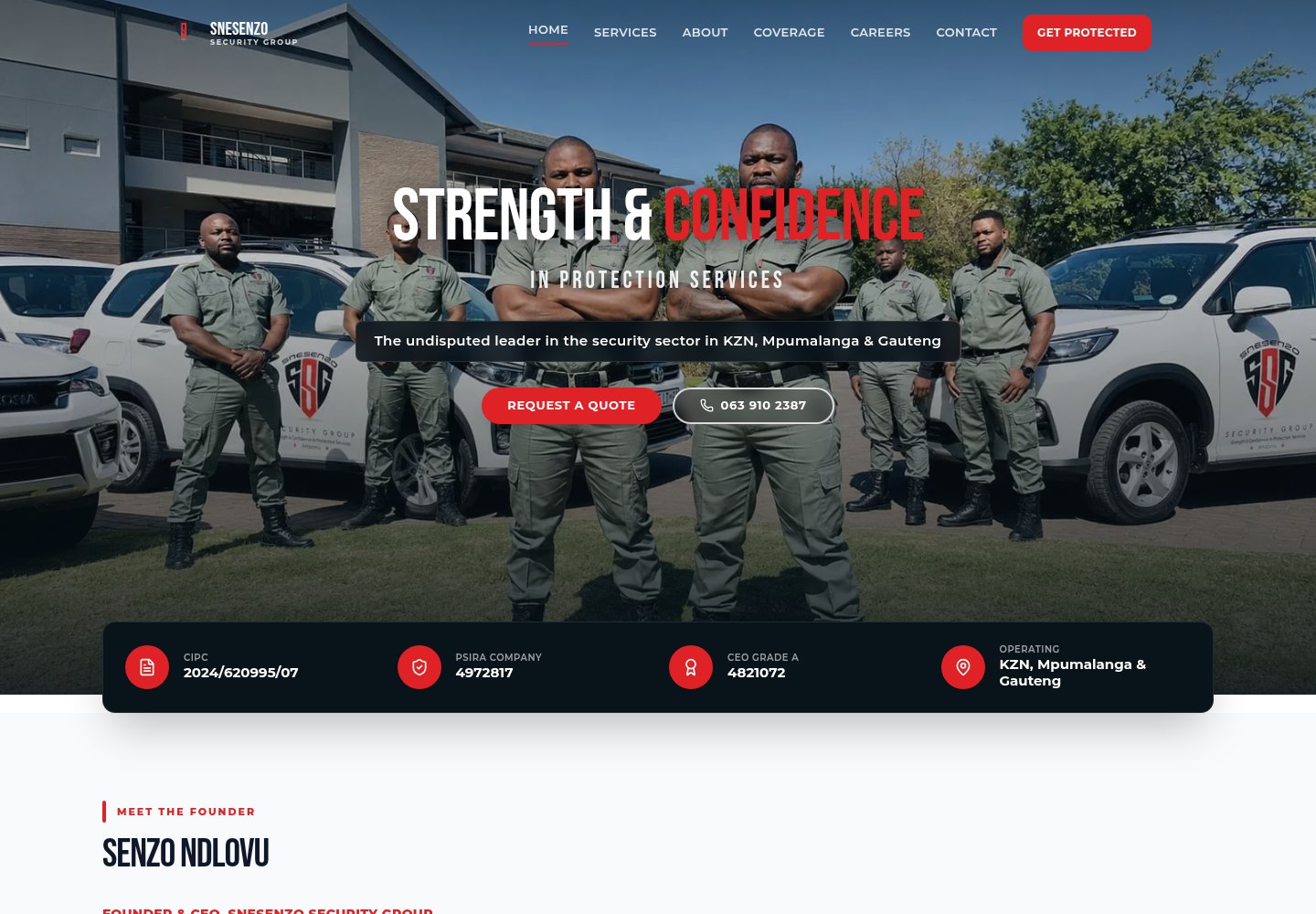
For Snesenzo Security Group, visitors need to understand the available security services and reach the business to discuss a quote. For the Newcastle Amcordam Festival, event information and photo galleries help people see what the event is about. Its website also keeps ticket release updates together while tickets are marked “coming soon”.
These are different customer journeys. A good website makes its own journey clear instead of copying features from a business with different needs.
Put the important information where people can find it
Someone arriving on your homepage should quickly understand your service, the people you help and how to reach you. Use simple English. “We install and maintain…” is easier to understand than a slogan that never names the service.
Most small business websites need these basics:
- A clear introduction and a short explanation of your services or products.
- Real photographs, examples of work or genuine customer feedback.
- Your correct contact details and the areas you serve.
- A contact form, WhatsApp link or booking option that fits the business.
- Answers to common questions, such as what is included and how to get a quote.
Make the phone experience easy
Check how the site works on a small screen before treating it as finished. Text should be comfortable to read. A visitor should be able to tap the main button without hunting for it, and a form should not ask for information the business does not need.
Large photographs can slow a page down. Crowded sections can bury the contact button. Keep images useful, use enough space between elements and make links clear. Also consider people using a keyboard or assistive technology: buttons need understandable labels, and important information needs to be actual text.
Website requests from Osizweni and Madadeni
A shop, service business or contractor in Osizweni or Madadeni needs a website that explains the work and how to enquire. State the actual area you serve, show genuine photographs or completed jobs, and make your phone number or WhatsApp button easy to find. If customers need directions, publish accurate location details.
Ntombii Tech is based in Newcastle and can discuss the brief, collect content and review the website online. Tell us your business location, services and main customer action. Businesses elsewhere in KZN can use the same remote enquiry process; the website should describe their own real location and service area.
Compare what is included in the quote
Two website quotes can look very different because they cover different work. Ask what the price includes before choosing. A small information website and an online shop need different features, and a low starting price may not cover everything you expect.
Get clear answers to these questions:
- How many pages are included, and who supplies the wording and photographs?
- Are the domain, hosting and future renewal costs included or charged separately?
- Does the price cover forms, WhatsApp, bookings or online payments?
- Who controls the domain and can request changes after launch?
- What ongoing support is included, and what do later updates cost?
Prepare your information before the build
A good brief does not need technical language. Send your logo, contact details, services, approved prices where relevant and photographs you are allowed to use. Include your business name exactly as it should appear and explain which customer action matters most.
If you already have a website, list what is confusing or outdated. If you are starting fresh, collect the questions customers ask on the phone or on WhatsApp. Those questions often make useful website content because they come from real conversations.
Keep the website useful after it goes live
Launching the site is the beginning of looking after it. Update changed contact details, prices and services. Check that forms and WhatsApp links still work. Add real projects when you have useful work to show.
Google also needs to be able to discover and understand your pages. Clear page titles, readable text and links between related pages help. Search visibility takes ongoing work; a website launch does not guarantee first place on Google.
Tell us what your website needs to do
Ntombii Tech builds websites from Newcastle, KZN, with enquiries welcome from Osizweni, Madadeni and elsewhere in South Africa. Send your services, logo, contact details and the main thing customers should do on the site. We can then discuss the pages, features and quote.
Look through our work, or send us a short brief with your services and the features you need. That gives us a better starting point than choosing a design before deciding what the website is for.
Sources and further reading
References checked on 12 October 2026.
Put the advice to work.
Tell us about your business and the website you have in mind. We’ll help you work out the pages, features and search basics you need.

Do you still need a website if you have social media?
Social media can introduce people to your business and keep them updated. Your website gives you a place to explain services, organise your work and share a direct link to the right information. The two can work together.
For example, a social post can send someone to a service page instead of asking them to scroll through months of posts. That page can answer their question and give them a clear way to contact you.